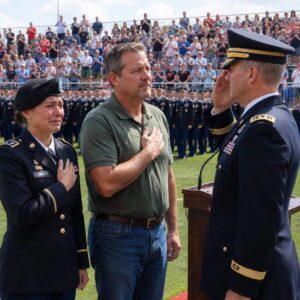
He said my name like a sentence being carried out. The courtroom air vanished, every eye pinned to the judge’s hand as he lifted my military ID like evidence of a second, secret life. My family thought this was about dirt and fences. They didn’t know it was about signatures, corridors, and a brass comp… Continues…
They had always believed love was proven with noise—shouted promises, slammed doors, grand gestures that never lasted past the season. I learned in Yemen that survival lived in quieter things: coordinates written twice, routes cross-checked, a compass you trusted more than the person beside you. That same discipline was buried in my grandfather’s paperwork, in clauses no one else bothered to read, in dates that told a different story than my father’s outrage.
When the judge traced that story aloud, it didn’t feel like winning. It felt like someone finally turning on the lights in a house we had all stumbled through in the dark. My father’s anger shrank into something smaller, almost fragile, when he realized the betrayal he felt was only the mirror of his own choices. I did lock the doors that day—but only to keep the promises he’d signed and my grandfather had quietly written for me to keep.